Inflation and Gold: Discover How to Protect Your Wealth

Learn how gold acts as a refuge during inflation, its price relationship, and strategies for investing in this precious metal.
Learn how gold acts as a refuge during inflation, its price relationship, and strategies for investing in this precious metal.
Key Points
We have heard it time and again: inflation is the silent thief of purchasing power. In an economic context where the specter of rising prices threatens both savings and the real value of income, an essential question arises for every investor: How can we protect our wealth in times of increasing inflation? This is where the relationship between inflation and gold becomes particularly relevant. In this article, we set out to explain why and how gold has historically served as a fortified barrier against money losing its value.
Inflation is the economic process that leads to a general and sustained increase in the prices of goods and services. When this phenomenon occurs continuously, it erodes the purchasing power of a currency—in other words, the same amount of money buys fewer goods. As a result, inflation becomes a formidable enemy for investors, decreasing the real value of their savings and making long-term financial planning more challenging.
Historical periods of inflation, such as those experienced in the 1970s in the United States, have shown how inflation can severely impact traditional investments, prompting investors to seek refuge in alternative assets like gold (Source: Focus Economics).
Throughout history, gold has proven to be an effective combatant against the specter of inflation. Although its reaction is not always immediate or uniform, the general trend shows that in periods of high inflation, gold manages to preserve and even increase its real value.
The mechanism behind the relationship between inflation and the price of gold centers on demand. When inflation rises and fiat currencies lose purchasing power, investors flock to gold, often driving its price upward. However, several additional factors contribute to this phenomenon, such as global supply and demand for gold, the state of worldwide economic crises, and the level of confidence in fiat currencies.
A clear example of this occurred during the 1970s. In the period of stagflation—characterized by high inflation combined with low economic growth—that the United States experienced, gold saw a dramatic surge in its price, cementing its reputation as a safe haven.
A safe-haven asset is one that maintains, or even increases, its value during times of economic uncertainty or crisis. Gold fits this definition perfectly, but why exactly is it considered a safe haven?
Firstly, there is the issue of gold’s scarcity. Gold is a limited resource that exists in finite quantities on Earth, which gives it intrinsic value and resistance to devaluation. Additionally, gold enjoys global recognition; it is accepted worldwide as a means of exchange and a store of value. Finally, unlike fiat currencies, gold is not subject to monetary policies and cannot be inflated at will.
Nevertheless, gold is not the only safe-haven asset available. Other precious metals, such as silver, can also serve as a shield against inflation. However, gold remains the king, primarily due to its greater liquidity and lower volatility.
There are various ways to invest in gold to protect against inflation. Some options include the purchase of physical gold, investing in gold ETFs, and buying mining stocks.
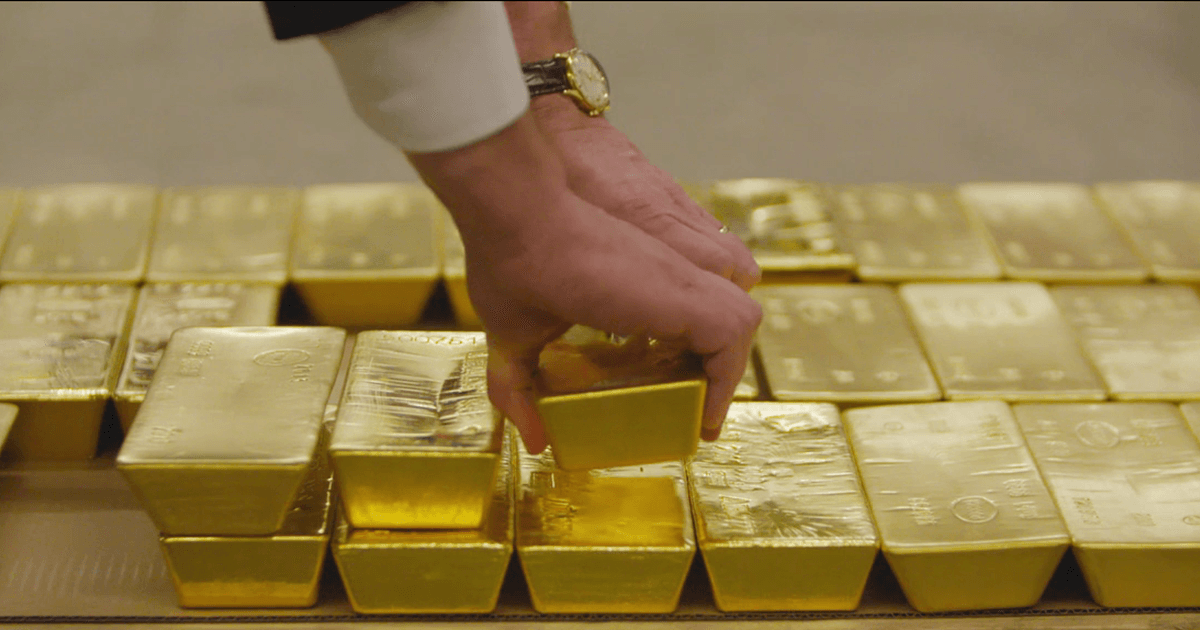
Physical gold comes in the form of bars and coins. Although owning physical gold allows investors to hold a tangible asset and enjoy a certain level of security, it is important to consider the challenges associated with storage and safeguarding.
On the other hand, gold ETFs are exchange-traded funds that track the price of gold without the need for physical storage, offering greater liquidity and easier access for investors.
Investing in mining stocks, meanwhile, involves an indirect investment in gold via companies that extract the metal. While this option may come with higher risk, it can also yield greater returns depending on the performance of the mining company.
It is crucial to emphasize that the decision to invest in gold versus other assets during periods of high inflation depends on the individual investor. Nonetheless, diversification of the portfolio remains a fundamental element of any investment strategy.
We have examined in detail how gold can serve as a protective shield against the erosion of purchasing power due to inflation, and how this characteristic can be leveraged to strengthen our investments. It is now time to analyze in depth how the profitability of gold changes when inflation rises.
Generally speaking, when inflation is high and interest rates are low or even negative, gold tends to offer better returns (Source: Focus Economics). It should be noted that since gold, as a secure and metallic investment, does not generate interest on its own, lower interest rates may tempt investors to choose gold over bonds or other financial assets with lower yields.
Historically, during times of great economic uncertainty and low real interest rates, the demand for gold has skyrocketed. A clear example of this is in 2023, when the price of gold reached nearly historic highs of around $2100 per ounce (Source: Cohen).
It is important to remember that while gold is a powerful hedge against inflation, other precious metals can also be effective as part of a diversified strategy. The relationship between high inflation and precious metals is certainly an area worth exploring in greater depth.
Having detailed how inflation impacts gold investments, it is time to offer a series of tips and best practices for those considering gold as a strategy to protect their wealth against inflation.
Finally, it is important to reiterate that gold should be viewed as part of a comprehensive wealth protection strategy—not as the sole solution to inflation.
Gold’s role as a safe haven in times of high inflation remains as relevant as ever. Its resistance to the erosion of purchasing power, coupled with its ability to preserve and even increase its real value during periods of economic uncertainty, makes it one of the most reliable investment strategies during inflationary times.
Furthermore, gold offers a number of additional benefits, including diversification, global acceptance, and the fact that it is not subject to monetary policies. These factors make it especially attractive to investors. However, before committing to a gold investment, it is essential to consider the liquidity factors, storage costs, commissions, and the risks associated with each type of investment.
In summary, while this precious metal can play a crucial role in hedging against inflation, it should form part of a broader, diversified investment strategy.
We invite you to continue learning about gold investment strategies and other assets at Invesoro, and to stay informed so that you can make smart, effective decisions.
Gold possesses a series of characteristics that make it an effective shield against inflation. In particular, the fact that it is a limited resource with constant global demand—and that it is not subject to monetary policies—ensures that its value is resistant to the devaluation typically caused by inflation.
When inflation is high and the purchasing power of fiat currencies declines, investors tend to seek safety in assets such as gold. As demand for gold increases, its price naturally tends to rise.
There are several ways to invest in gold, including the purchase of physical gold, investing in ETFs that track the price of gold, or buying stocks of mining companies. Each of these options comes with its own set of costs, benefits, and risks, and the best choice depends on the individual investor's preferences and needs.
In addition to gold, other precious metals such as silver, platinum, and palladium can also serve as safe havens during periods of inflation.
A diversified approach should involve holding a variety of assets in your investment portfolio. This means not only investing in gold, but also considering stocks, bonds, real estate, and other assets as part of a balanced investment strategy.
The amount of gold to hold in an investment portfolio depends on various factors, including the investor's risk profile and investment horizon. Some experts suggest keeping between 5% and 10% of your portfolio in gold, though this can vary according to your individual investment strategy.